
Operations
Part of How to reduce SaaS churn with UK onboarding emails
How to reduce SaaS churn with UK onboarding emails
Reduce SaaS churn with a UK onboarding email sequence: five triggered messages, sample copy, cadence, PECR and UK GDPR checks, and retention measures.
What to take away
- Onboarding emails are the cheapest retention lever in most UK SaaS businesses: what a new account does in the first 30 days usually decides whether it renews.
- PECR controls whether direct-marketing email may be sent; UK GDPR and the Data Protection Act 2018 govern personal-data processing. Marketing messages need a working opt-out.
- Five messages triggered by behaviour cover setup, first value, habit, expansion and a human check-in.
- Judge the sequence on activation and renewal rate, not open rates.
Why churn is decided in the first month
Most subscription cancellations in British SaaS companies are not pricing objections. They are quiet failures of setup. A buyer who never connects the data source, invites a colleague or sees one useful report has no reason to renew, and no discount will fix that.
Onboarding email is the rare channel that reaches every new account without a sales call. It also runs unattended, which is why teams that treat product-led growth marketing as a strategy build the sequence before they scale acquisition.
What PECR and UK GDPR require from onboarding email
PECR sits on top of the Communications Act 2003, which governs electronic communications services in the UK. For electronic marketing email to individual subscribers, you need consent or the soft opt-in: the details must have been obtained during a sale or negotiations for a sale, the marketing must be for your own similar products or services, and the person must have been given a chance to refuse both when their details were collected and in every message. PECR generally does not require prior consent for marketing email to corporate subscribers, but identify the sender and provide a simple way to opt out. The Information Commissioner's Office (ICO) is the UK regulator to consult about PECR and complaints concerning unsolicited email.
An onboarding email that promotes product use or features may count as direct marketing; a message strictly needed to provide the service is different, and the content matters. Where personal data is used, comply with the Data Protection Act 2018 and UK GDPR, record the applicable lawful basis, and keep an audit trail. UK GDPR's lawful bases are consent, contract, legal obligation, vital interests, public task and legitimate interests; choosing a basis does not override any consent PECR requires.
A five-step onboarding sequence
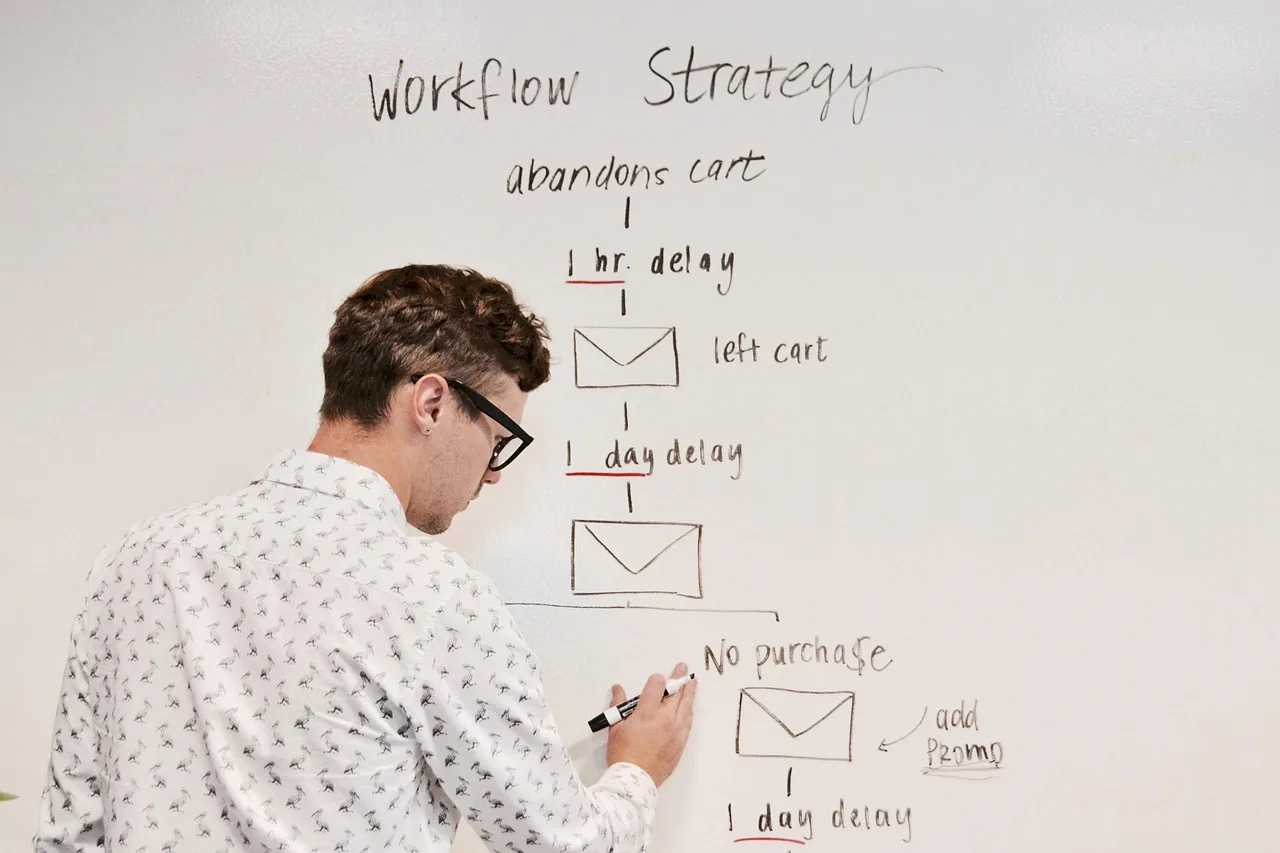
Use this as a behaviour-led sequence, not a fixed daily blast. Send a message only when its trigger is met, and leave at least three days between marketing messages; if a trigger arrives sooner, wait.
- Setup — immediately after account creation.Subject: “Connect your first data source”. Copy: “Welcome to [product]. Connect [data source] to bring your first [outcome] into your workspace. Start here: [setup link]. If you get stuck, reply and we’ll help.”
- First value — when setup is complete, at least three days after the first email.If setup is still incomplete at that point, send an unblocker instead. Subject: “Your first [outcome] is one step away”. Copy: “Your [data source] is connected. Complete [core action] to see [specific outcome] in [product]. Continue here: [action link].”
- Habit — after the first successful core action, at least three days after the second email.Subject: “Make [core action] part of your workflow”. Copy: “You’ve just [achieved outcome]. Save this view and repeat [core action] the next time you [relevant task]. Here’s how: [guide link].”
- Expansion — when repeated use or a team need appears, at least three days after the third email.Subject: “Bring your team into [product]”. Copy: “You’ve used [feature] to [outcome]. Invite [relevant colleague or role] so they can work from the same information: [invite link].”
- Human check-in — when the account shows a blocker or inactivity, at least three days after the fourth email.Subject: “Can I help with [specific task]?” Copy: “It looks like [specific setup step or task] may still be in the way. Reply with what you’re trying to achieve and I’ll help you find the next step.”
Five-step onboarding sequence
- Welcome and one action
- First value walkthrough
- Team habit invite
- Expansion signal upgrade
- Human check-in
Match the message to the churn driver
Different accounts leave for different reasons. Diagnose the driver before you add another message to the sequence.
Churn driver to email match
Churn driver
- Setup never finished
- Nudge exact blocking step
- Only one seat in use
- Invite prompt for admin
- No reporting value seen
- Worked example with own data
- Silent for 14 days
- Personal check-in from named contact
- Usage ceiling reached
- Upgrade note with pricing in pounds
Email that answers it
- Setup never finished
- Activation rate
- Only one seat in use
- Seats per account
- No reporting value seen
- Time to first report
- Silent for 14 days
- Reply rate
- Usage ceiling reached
- Expansion rate
Metric to watch
- Setup never finished
- Only one seat in use
- No reporting value seen
- Silent for 14 days
- Usage ceiling reached
Run this as a monthly review with support and product. If two drivers dominate, rewrite those two emails rather than adding a sixth message. Support tickets and cancellation reasons are the cheapest research you will ever run.
Measure against renewal, not opens
Open rates flatter lifecycle email, so treat them as a health check rather than a result. Set your baseline from sector ranges such as our SaaS email marketing benchmarks, then compare cohorts.
The numbers that matter sit further down the funnel: activation within 30 days, seats added by day 45, and net revenue retention at renewal. Tag each new account to the sequence version it received.
Report it monthly to whoever owns revenue. Email is one input into retention, so pair it with in-product fixes and a clean sales handover. Segment by plan and by acquisition channel, because a paid-trial cohort rarely behaves like a self-serve signup.
Keep cancellation honest
The Competition and Markets Authority has acted on auto-renewal terms that customers found hard to spot or cancel. When reviewing subscription cancellations, consider the Consumer Rights Act 2015 and the subscription-contract rules in the Digital Markets, Competition and Consumers Act 2024. The DMCC Act 2024 provides that, unless the consumer chooses otherwise, they are taken to exercise the cancellation right that gives them the most advantageous remedy. Make ending a subscription as simple as starting one, because a trapped customer never expands.
Failed card payments are a separate churn stream. A short dunning sequence with a direct link to update payment details recovers revenue that has nothing to do with product value.
Common questions
How often should onboarding emails be sent?
Trigger them on behaviour, with no more than one message every three days. A fixed daily cadence reads as pressure and lifts unsubscribes.
Do business and consumer lists need different consent?
PECR distinguishes corporate from individual subscribers, not simply work from personal email addresses. For individual subscribers, use consent or meet the soft opt-in conditions; corporate subscribers can generally be emailed without PECR consent, but identify the sender and provide an opt-out. UK GDPR still applies when you process personal data.
Which metric proves the sequence is working?
Activation in the first month, tracked by cohort. Renewal confirms it later, but activation moves first and gives you something to fix this quarter.
Can a product email sell an upgrade?
Ask for marketing consent at sign-up and keep product and selling messages separate. A lifecycle email that pushes an upgrade is marketing, whatever the inbox label says.