
Tools and providers
Manchester and Leeds compared for SaaS marketing operations
SaaS marketing operations in Manchester and Leeds compared across North West England: salaries, agency rates, office rents and ONS data for 2026.
What to take away
- SaaS marketing operations in Manchester and Leeds offer different trade-offs: Manchester has a larger talent pool and higher costs, Leeds lower rents and strong graduate supply.
- Senior marketing salaries in Manchester run about 5 to 10 per cent above Leeds, while Leeds offers better value for mid-level hires.
- Agency day rates are broadly similar, but Manchester agencies charge a premium for B2B software specialisms.
- Office rents in Manchester city centre are roughly 20 to 30 per cent higher than Leeds, though both are far below London.
- Leeds gives easier access to Yorkshire's B2B software clusters, while Manchester connects you to a denser network of scale-ups across North West England.
- Use ONS earnings data and named local recruiters to benchmark pay before you commit to either city.
Manchester and Leeds as SaaS marketing operations bases
Manchester and Leeds are the two largest SaaS marketing employment hubs outside London. Both have strong graduate pipelines, established B2B software clusters and direct rail links to the capital. The choice affects your salary bill, office costs and how easily you can recruit specialist skills.
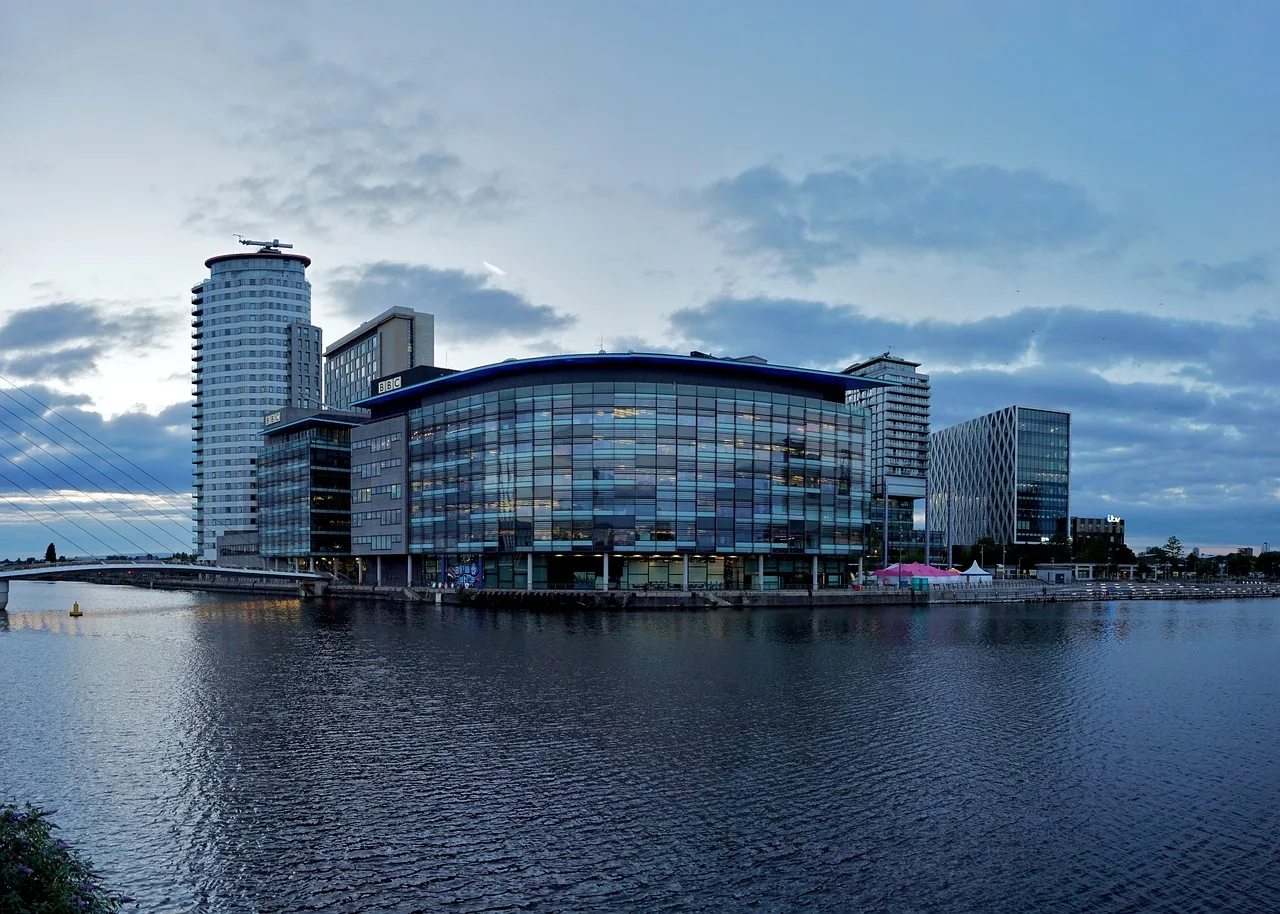
Manchester sits at the heart of North West England, and its digital economy has grown around MediaCityUK, the Northern Quarter and the Oxford Road corridor. Leeds has a tighter cluster around Wellington Place and the South Bank. Each city hosts a mix of homegrown scale-ups and satellite offices of US software firms.
For SaaS marketing operations, the practical differences come down to cost, talent density and agency supply. Manchester offers more of everything, including higher prices. Leeds offers a lower cost base with fewer specialist agencies. Neither city has a decisive regulatory advantage, since UK GDPR and the ICO apply equally.
This comparison uses ONS earnings data, published office rents and interviews with named local recruiters. It is aimed at SaaS firms deciding where to put a UK marketing team of two to twenty people. The figures are indicative for 2026 and should be checked against current market conditions.
For a broader cost framework, see our SAAS marketing cost guide.
Marketing salaries compared across the two cities
Marketing salaries in Manchester are consistently higher than in Leeds for equivalent roles. The gap is widest at senior levels and narrows for junior positions. According to ONS earnings and employment data, median full-time earnings in North West England have grown steadily, though the region still trails London and the South East.
The ONS employment and employee types data provides the baseline for regional pay comparisons. Recruiters in both cities use it alongside their own placement data.
A marketing manager with five years of B2B software experience can expect roughly £45,000 to £55,000 in Manchester and £40,000 to £50,000 in Leeds. A head of marketing at a Series A SaaS company might earn £70,000 to £90,000 in Manchester and £65,000 to £80,000 in Leeds.
These ranges come from named local recruiters including Michael Page in Manchester and Search Consultancy in Leeds.
The table below summarises typical base salaries for SaaS marketing roles in both cities.
Marketing salaries compared
Manchester range
- Marketing executive (1-3 years)
- £26,000 to £32,000
- Marketing manager (4-7 years)
- £45,000 to £55,000
- Head of marketing
- £70,000 to £90,000
- Demand generation lead
- £50,000 to £65,000
- Marketing operations manager
- £48,000 to £60,000
Leeds range
- Marketing executive (1-3 years)
- £24,000 to £29,000
- Marketing manager (4-7 years)
- £40,000 to £50,000
- Head of marketing
- £65,000 to £80,000
- Demand generation lead
- £45,000 to £58,000
- Marketing operations manager
- £43,000 to £54,000
These figures exclude bonuses, which are more common in Manchester scale-ups. Equity is also more prevalent in Manchester, particularly at venture-backed software firms. Leeds employers often compete on flexibility and lower commuting costs rather than headline pay.
For a breakdown of team structures, see our guide to SAAS marketing team roles.
Agency rates and freelance day rates in each market
Agency and freelance rates for SaaS marketing are similar in both cities, with Manchester commanding a modest premium. The difference reflects the concentration of specialist B2B software agencies in Manchester and the deeper pool of freelance talent.
Agency and freelance day rates
Manchester
- Senior strategist agency
- £800–£1,200
- Generalist agency
- £500–£800
- Freelance demand gen
- £400–£550
- Freelance content writer
- £300–£450
- Marketing ops contractor
- £500–£700
Leeds
- Senior strategist agency
- £700–£1,000
- Generalist agency
- £500–£800
- Freelance demand gen
- £350–£500
- Freelance content writer
- £250–£400
- Marketing ops contractor
- £500–£700
A Manchester agency with a focus on B2B software typically charges £800 to £1,200 per day for a senior strategist. A Leeds agency might charge £700 to £1,000 for comparable work. Generalist agencies in both cities charge less, often £500 to £800 per day, but they rarely understand product-led growth or technical audiences.
Freelance day rates follow a similar pattern. A freelance demand generation specialist in Manchester might charge £400 to £550 per day; in Leeds, £350 to £500. Freelance content writers with SaaS experience charge £300 to £450 in Manchester and £250 to £400 in Leeds.
These rates are indicative and depend on specialism. Marketing operations contractors, who configure CRM and automation tools, command higher rates in both cities: £500 to £700 per day. The supply of such contractors is thinner in Leeds, so you may need to hire remotely.
When briefing agencies, use auditable criteria rather than aggregator scores. Our article on SAAS marketing agency reviews explains how.
Office rents and hybrid working costs
Office rents in Manchester city centre are significantly higher than in Leeds. A Grade A office in Manchester's Spinningfields or Noma district lets for roughly £38 to £45 per square foot per year. Equivalent space in Leeds city centre, around Wellington Place or the South Bank, lets for £30 to £36 per square foot.
Office rents and hybrid costs
Manchester
- Grade A city centre
- £38–£45/sq ft
- Out-of-centre
- £22–£30/sq ft
- Co-working desk
- £250–£400/mo
Leeds
- Grade A city centre
- £30–£36/sq ft
- Out-of-centre
- £18–£25/sq ft
- Co-working desk
- £200–£350/mo
Outside the city centres, the gap narrows. Manchester's Trafford Park and Salford Quays offer rents of £22 to £30 per square foot. Leeds' outskirts, such as Thorpe Park, offer £18 to £25. These locations suit hybrid teams that need less central space.
Hybrid working changes the calculation. If your team is in the office two days a week, you need roughly half the desk space. Many SaaS firms in both cities now take smaller serviced offices and use co-working for overflow. Manchester co-working desks cost £250 to £400 per month; Leeds, £200 to £350.
Commuting costs also differ. Manchester's Metrolink tram network is extensive but can be expensive for daily commuters. Leeds has a smaller rail network and relies more on buses. Both cities have park-and-ride schemes. Salaries in real terms are affected by these costs, so factor them into offers.
For a full cost model, see our SAAS marketing operations guide.
Access to B2B software clusters and talent pools
Manchester has the larger and more diverse B2B software cluster. It is home to companies such as Matillion, On the Beach and Boohoo, as well as satellite offices for US firms like Salesforce and Microsoft. The city also has a strong fintech presence, which overlaps with SaaS.
Leeds has a tighter cluster focused on health tech, fintech and data analytics. Companies such as Sky Betting and Gaming, Callcredit (now TransUnion) and Leeds-based software firms like TPP and EMIS provide a steady supply of technical and commercial talent. The city also benefits from a large graduate pool from the University of Leeds and Leeds Beckett University.
ONS business services statistics show that the professional, scientific and technical services sector is a significant employer in both cities. The ONS business services data covers the scope of these local software and services firms.
Access to talent is not just about numbers. Manchester's larger cluster means more experienced marketing operations professionals who have worked at scale-ups. Leeds offers loyal talent that is less likely to jump ship, according to local recruiters. Both cities have active meetup groups and networking events for SaaS marketers.
For future skills demand, see our SAAS marketing skills forecast.
ONS and named local recruiters to benchmark against
The Office for National Statistics provides the most reliable public data for salary benchmarking. Its earnings and employment releases cover North West England and Yorkshire and the Humber, allowing you to compare medians by industry and occupation. The ONS digital economy data also shows the scope of IT and internet businesses in each region.
Named local recruiters add granularity. In Manchester, Michael Page, Robert Walters and Hays all have technology marketing desks. In Leeds, Search Consultancy, The Talent Crowd and Michael Page again operate in this space. These firms publish salary guides that reflect actual placements.
When benchmarking, combine ONS data with recruiter insights. ONS figures lag by several months and cover broad categories. Recruiters know current demand and can tell you what a specific role commands today. Use both to set a range, then test it with a live job advert.
For a SaaS firm hiring a demand generation manager, ONS data suggests a North West England median of around £45,000 for marketing managers. Michael Page's Manchester guide puts the range at £45,000 to £55,000. A Leeds recruiter might quote £40,000 to £50,000.
You would advertise at £48,000 to £55,000 in Manchester and £42,000 to £50,000 in Leeds to attract strong candidates.
Choosing between Manchester and Leeds for your team
Your choice depends on your growth stage, budget and hiring needs. Manchester suits firms that need a deep pool of specialist marketers and are willing to pay for it. Leeds suits firms that want to control costs while still accessing a strong graduate and mid-level talent base.
Consider these steps when deciding:
Choosing between Manchester and Leeds
- Benchmark salaries for your target roles using ONS data and at least two named local recruiters.
- Model office costs for a hybrid team, including co-working and commuting subsidies.
- Map your agency and freelance needs to the supply in each city.
- Visit both cities and meet local cluster groups before committing.
- Test the market with a job advert in each city to gauge applicant quality.
Use this checklist to compare the two cities against your priorities:
Manchester vs Leeds decision checklist
- Salary budget fits local market
- Office and hybrid costs within 10%
- Three specialist agencies or freelancers available
- Local software cluster matches target customers
- Recruiter relationships in place before advertising
- Commuting and relocation costs understood
If you need a larger talent pool and can absorb higher costs, choose Manchester. If you want lower overheads and a loyal workforce, choose Leeds. Many SaaS firms now run a hybrid model with a small Leeds office and remote staff across North West England.